


What is StVZO and Why Does It Matter?
The StVZO stands for Straßenverkehrs-Zulassungs-Ordnung, which translates directly to the Road Traffic Licensing Regulations. These laws dictate the precise technical and structural standards that vehicles—including bicycles and e-bikes—must satisfy before they can legally operate on public roads in Germany.
- Legal Road Access: Only e-bikes that meet strict StVZO benchmarks are allowed on public streets and bike paths (Radwege).
- Insurance and Liability Protection: In the unfortunate event of an accident, riding a non-compliant e-bike can void your insurance coverage. You could be held personally liable for millions of Euros in third-party property damage or personal injury claims.
- Product Quality and Safety Assurance: StVZO acts as a seal of quality. It ensures that critical components like braking mechanisms and electrical lights perform reliably under demanding conditions, keeping you and other road users safe.
Must-Have Features for a Legal Electric Bike in 2026
1. Advanced Lighting Systems

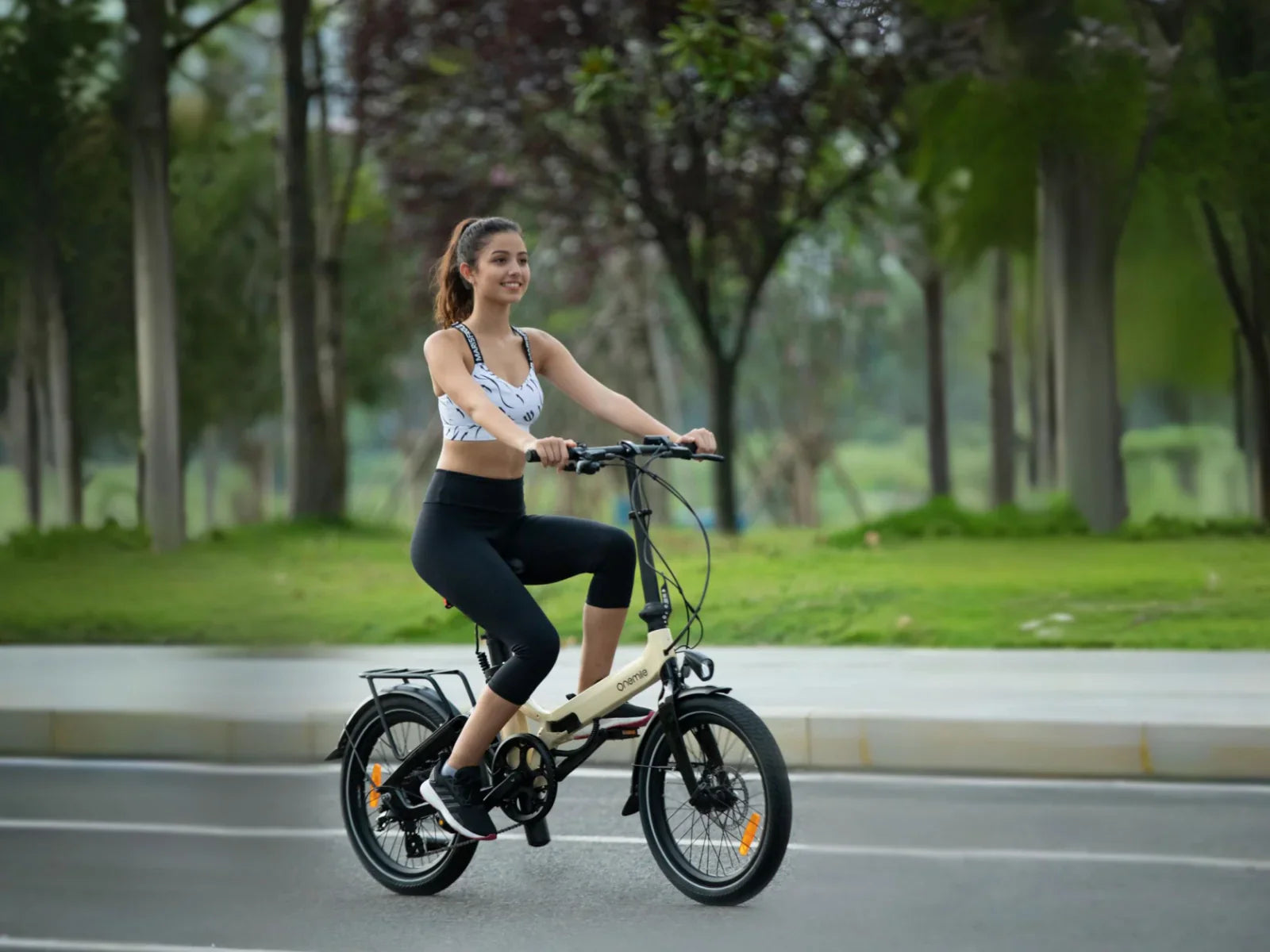
Under the 2026 StVZO guidelines, your e-bike must feature a permanently integrated or securely attached lighting system consisting of a white front headlight and a red rear light.
- Anti-Glare Technology: Front lights must feature a strict horizontal cut-off line (similar to automotive low beams) to prevent blinding oncoming cyclists and pedestrians.
- Reflectors: The lighting setup must be complemented by a white front reflector and a red rear reflector. Furthermore, the pedals must feature amber reflectors facing both forward and backward.
2. Dual Independent Braking Systems

Safety dictates that an e-bike must be capable of stopping quickly under any weather conditions. StVZO mandates two completely independent, high-performance braking systems (one for the front wheel and one for the rear). If one brake system fails unexpectedly, the secondary system must retain sufficient stopping power to bring the vehicle to a controlled halt.
3. Clear Warning Signal
A legal e-bike must be equipped with a high-decibel, clear-sounding bicycle bell. Electronic horns or sirens are generally prohibited on standard e-bikes; a traditional, distinct mechanical bell remains the gold standard for alerting pedestrians.
4. Wheel and Tire Visibility
To maximize side-profile visibility at intersections, the 2026 laws require that either the tires feature continuous reflective sidewall strips, or each wheel must be fitted with at least two yellow spoke reflectors (cat's eyes) positioned 180 degrees apart.
Conclusion

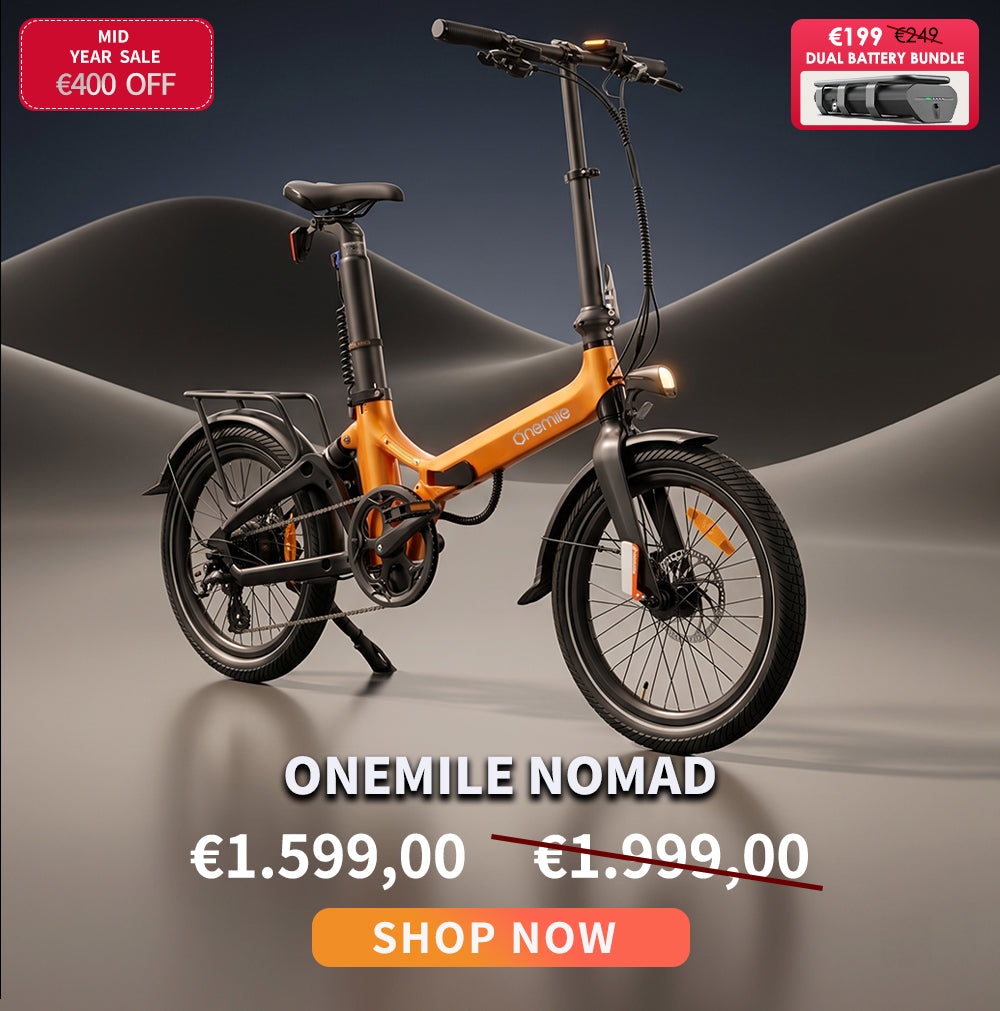
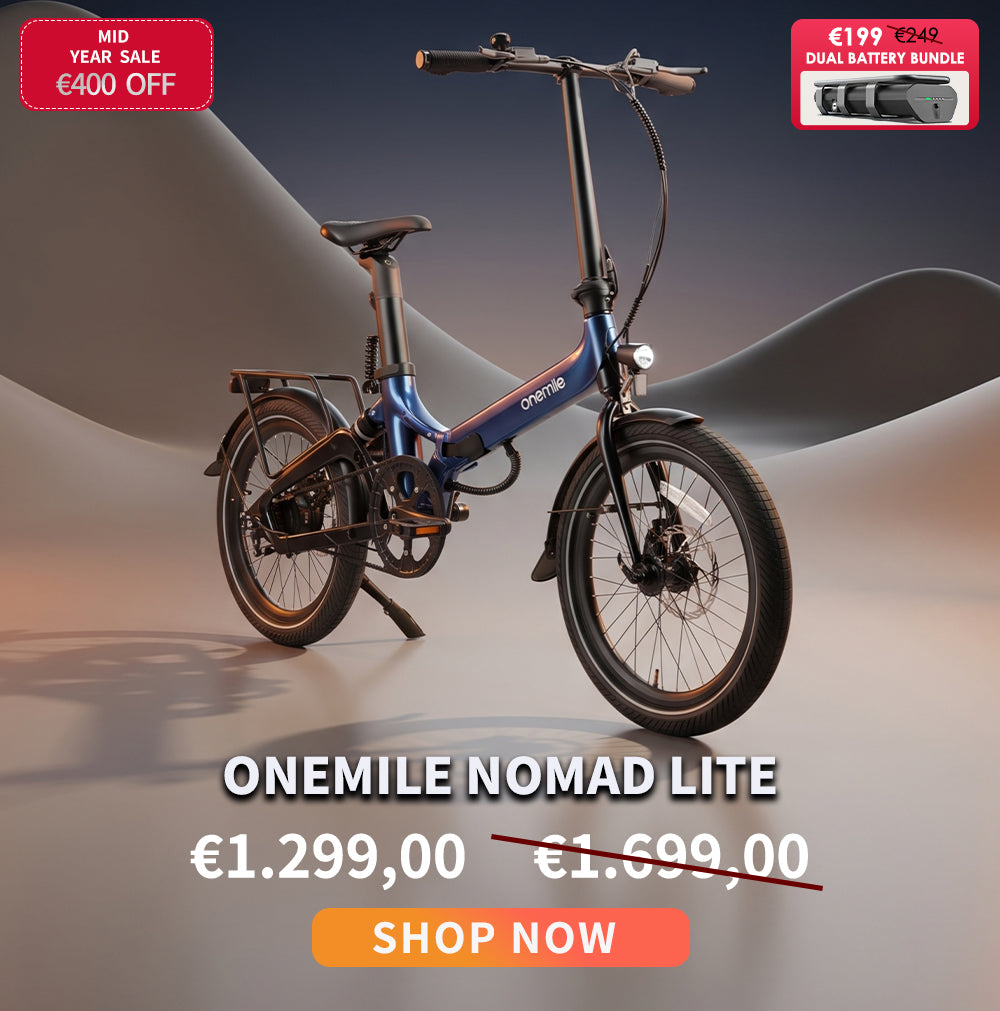
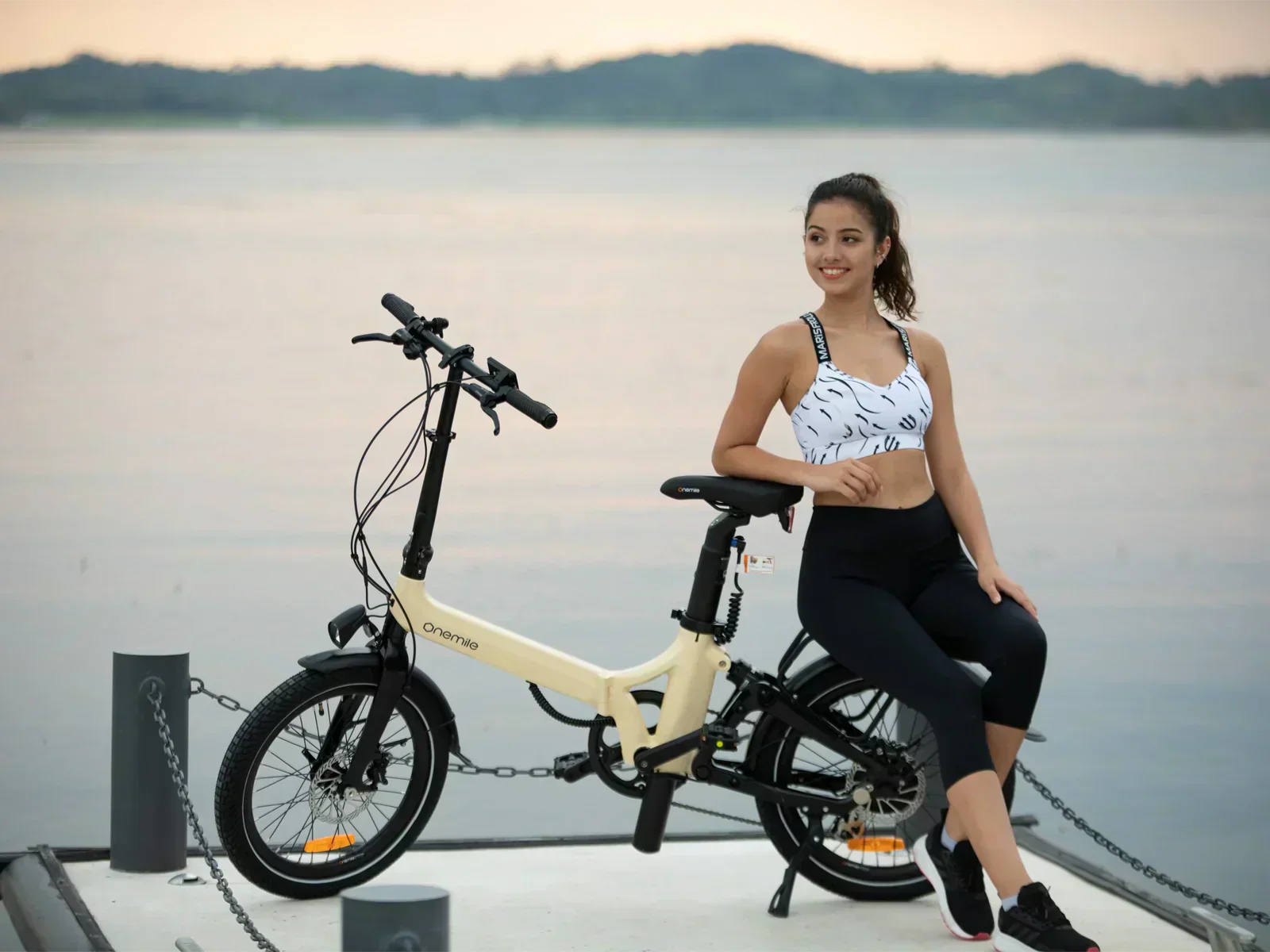
Navigating the 2026 German e-bike laws might seem complex, but it boils down to prioritizing safety and visibility. By opting for a reliable, structurally sound, and legal electric bike from the Onemile Nomad collection, you guarantee peace of mind, insurance validity, and an exceptional riding experience across European streets. Stay safe, stay legal, and enjoy the ride!
FAQ
Q1: Do Onemile electric bikes require a license plate in Germany?
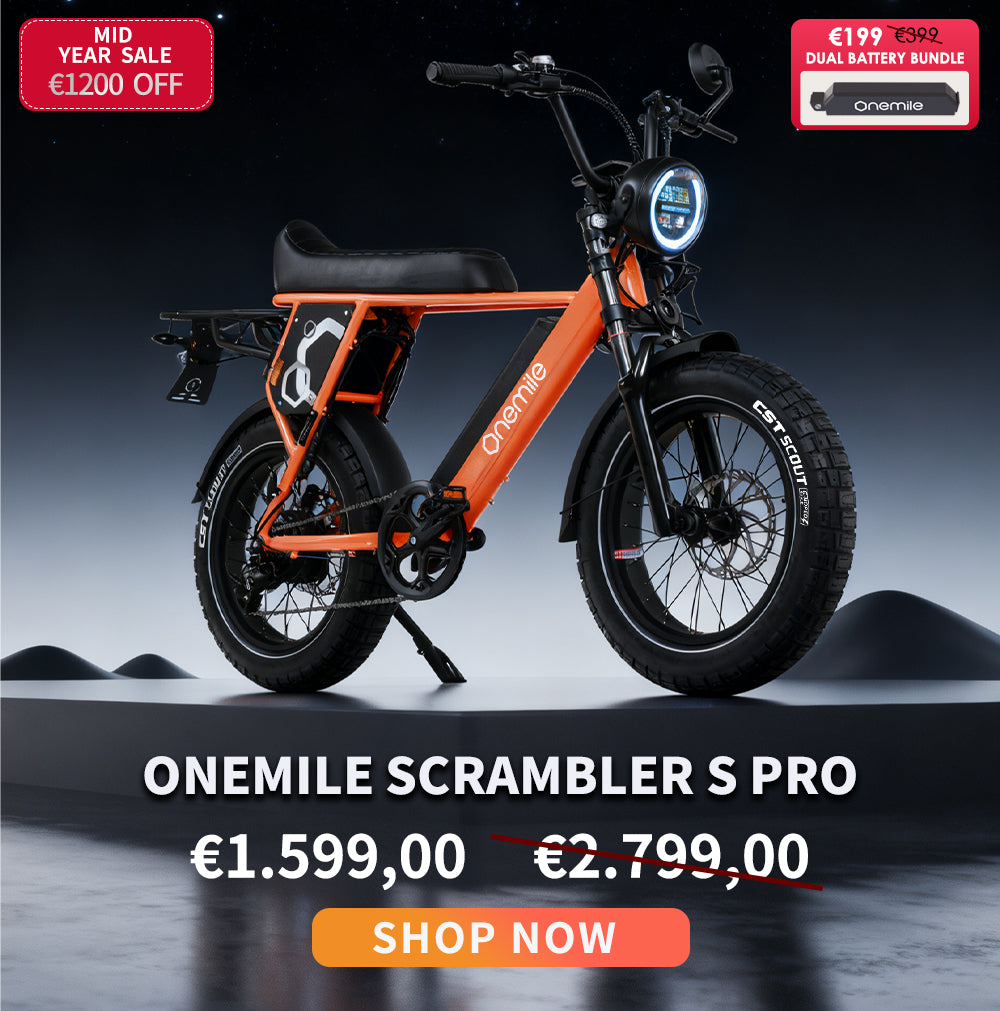
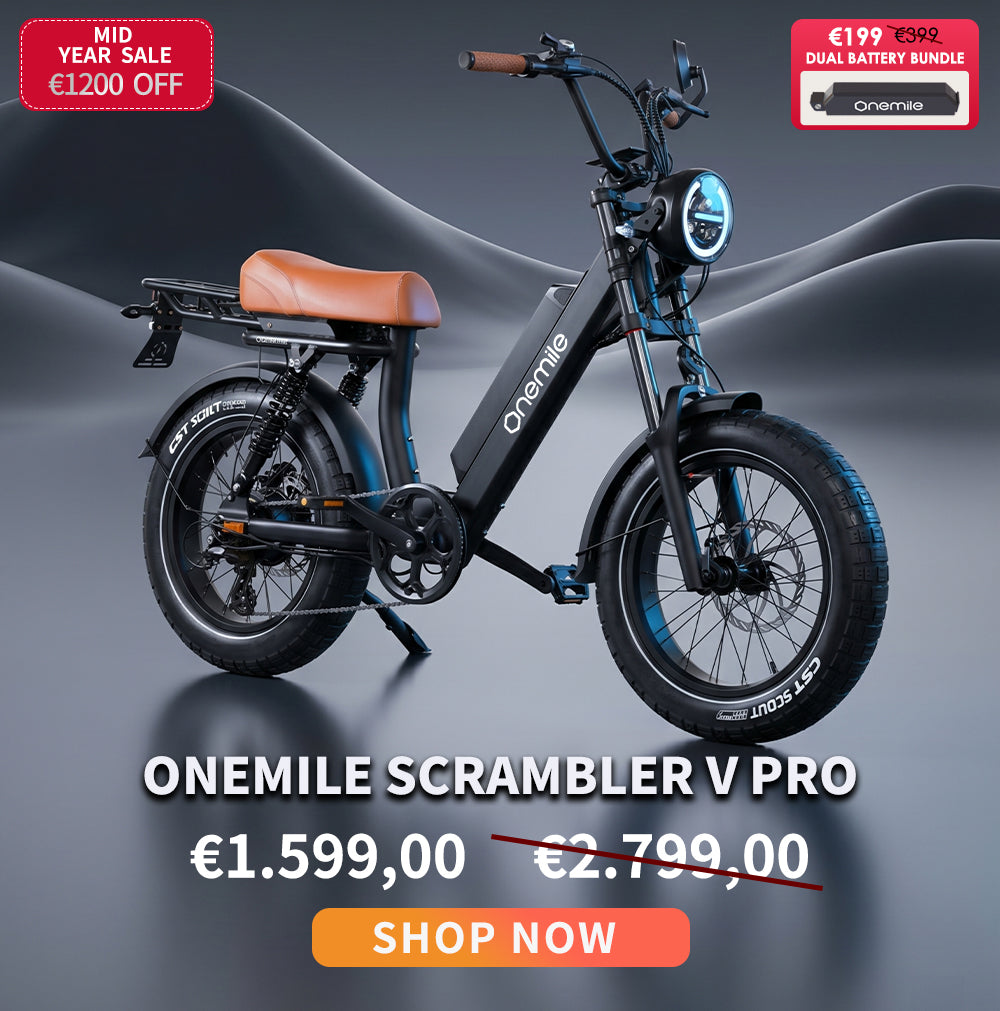
The Onemile Nomad series operates as a standard folding e-bike with a top assisted speed of 25 km/h, meaning it does not require registration or a license plate. The Onemile Scrambler can be electronically configured to 25 km/h to avoid registration, or set to 45 km/h, which transitions it into the S-Pedelec bracket requiring an insurance plate.
Q2: How to Register a Speed E-Bike in Germany?
- Secure Mandatory Third-Party Insurance: Contact an authorized German insurance provider to purchase a mandatory third-party liability policy (Haftpflichtversicherung). Upon payment, you will receive an eVB number (Electronic Insurance Confirmation code).
- Compile Your Documentation: Gather your vehicle's Certificate of Conformity (COC) provided by Onemile. (If a COC is missing, you must book an inspection with TÜV or DEKRA for individual vehicle approval). Bring your passport/ID, proof of purchase (invoice), and your German city registration certificate (Anmeldebestätigung).
- Visit the Registration Office (Zulassungsstelle): Submit your documents and pay the administrative registration fee. (Note: Electric micro-mobility options are exempt from vehicle annual tax).
- Obtain and Attach the Plate: Receive your registration certificate (Zulassungsbescheinigung) and small moped license plate, then secure it firmly to the rear of your e-bike.
Q3: How to Register a Speed E-Bike in France?
- Prepare Document Dossier: Organize the factory-supplied COC certificate specifying the unique vehicle identification number (VIN/Chassis Number), purchase invoice, your valid ID, and a French utility bill or tenancy agreement dated within the last 6 months as proof of residency.
- Purchase French Insurance: Secure a mandatory insurance contract from a French broker and obtain the green insurance voucher (Attestation d'assurance).
- Submit Online via ANTS: Log onto the official French ANTS website (Agence Nationale des Titres Sécurisés). Choose the "Register a new or used vehicle" portal. Upload your scanned documents, input the exact motor wattage and chassis number, and pay the corresponding processing fees.
- Receive the Carte Grise & Affix the Plate: Once validated, your official registration certificate (Certificat d'immatriculation / Carte Grise) will be delivered to your home. Use this certificate to print a standard compliance plate at a certified dealer and attach it to your bike.

Leave a comment
All comments are moderated before being published.
This site is protected by hCaptcha and the hCaptcha Privacy Policy and Terms of Service apply.