



A fundamental question remains for many eco-conscious consumers: with a lithium-ion battery onboard and a requirement for regular charging, are e-bikes eco-friendly?
The short answer is an unequivocal yes. When evaluated against personal internal combustion engine (ICE) vehicles, electric cars, and even heavy public transit, electric bikes stand out as unmatched champions of low-carbon mobility.
The Carbon Footprint: E-Bikes vs. Cars vs. Public Transit
|
Transportation Mode |
Average CO2 Emissions (g/km) |
Tailpipe / Direct Air Pollutants |
Primary Energy Conversion Efficiency |
|
Gasoline Car (ICE) |
150 - 200+ g/km |
High (CO, NOx, Particulates) |
~20% (80% wasted as heat) |
|
Electric Vehicle (EV) |
50 - 90 g/km (grid dependent) |
Zero Direct Emissions |
~60%-70% |
|
Public Bus / Subway |
30 - 80 g/person-km |
Moderate to Low |
Variable by occupancy load |
|
Electric Bicycle (E-Bike) |
2 - 22 g/km |
Zero Direct Emissions |
70%-80%+ |
-
Gasoline Vehicles: High Direct Emissions
Gasoline cars drive urban pollution, emitting 150 and 200g of CO2 per kilometer. Exhaust released straight into breathing zones compounds smog, carbon monoxide, and harmful nitrogen oxides (NOx).
2. Electric Cars: Substantial Manufacturing & Power Footprint
While electric automobiles eliminate tailpipe emissions during driving, their massive battery packs require energy-intensive manufacturing processes. Furthermore, moving a 2,000-kilogram vehicle to transport a single passenger consumes significantly more grid electricity per kilometer than micro-mobility alternatives.
3. Electric Bikes: The Micro-Mobility Advantage
In stark contrast, an e-bike generates roughly 22g of CO2 per kilometer—just 1% of a gasoline car's emissions and less than an electric car or subway. Consuming minimal energy with zero direct pollutants, e-bikes actively clean urban air.
Why E-Bikes Are the True Heroes of Green Commuting
1. Replacing High-Pollution Short Car Trips
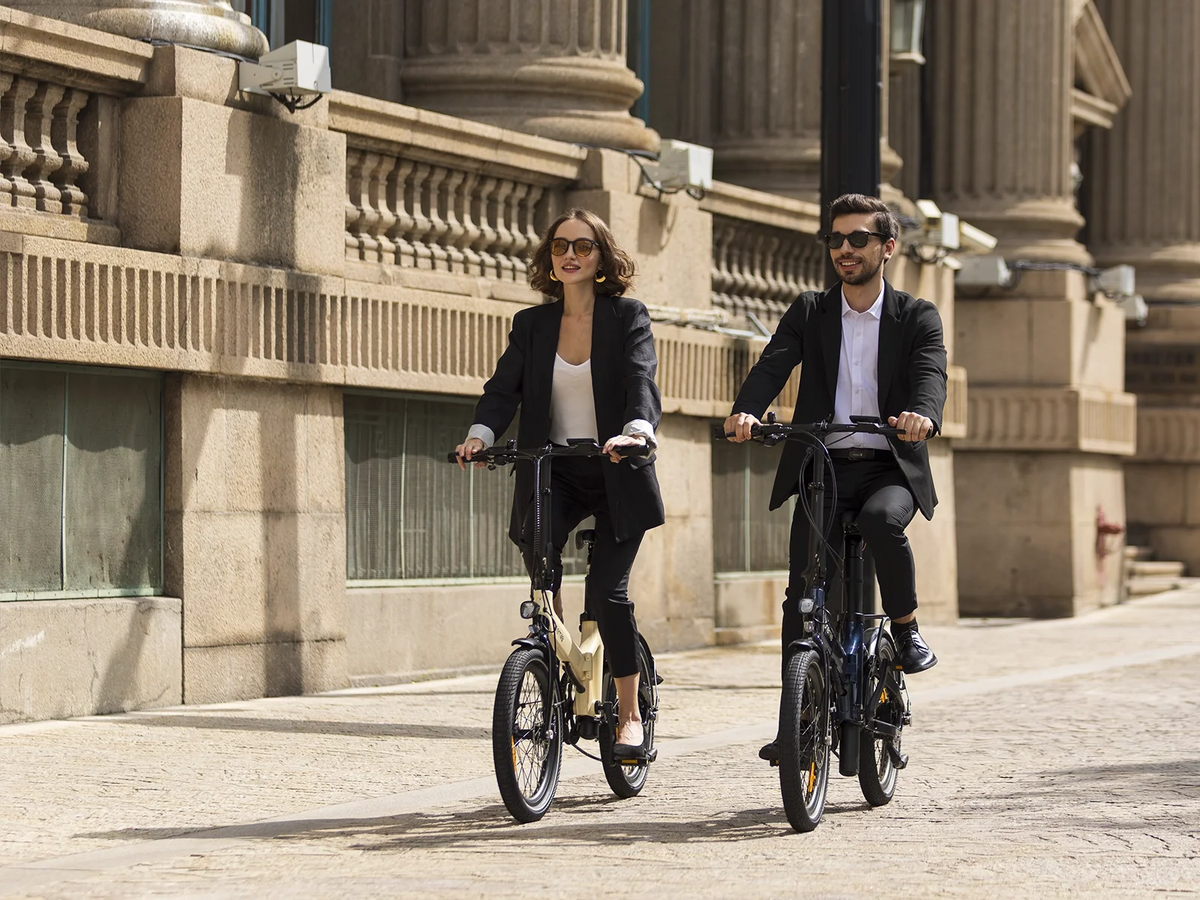
Transportation studies show that over 50% of urban car trips are shorter than 10 kilometers (5–6 miles)—distances perfectly suited for cycling. Cold-engine car starts during short trips burn fuel inefficiently and generate disproportional amounts of pollution. Compact and portable e-bikes—especially folding models designed for urban agility—provide a seamless, sweat-free alternative for these short journeys, directly removing fuel-burning vehicles from urban roads.
2. Mitigating Traffic Congestion and Urban Sprawl
Traffic jams carry hidden environmental penalties: idling engines waste millions of gallons of fuel annually while increasing toxic ambient emissions. The raw materials and spatial footprint required to manufacture and park a single automobile could produce dozens of lightweight e-bikes. By shifting commuters onto lightweight two-wheelers, e-bikes reduce congestion, lower idle emissions, and reclaim valuable public space.
3. Industry-Leading Energy Conversion Efficiency
Internal combustion engines convert only about 20% of the energy stored in gasoline into wheel propulsion, wasting 80% as heat and friction. Conversely, electric bike powertrains convert over 70% to 80% of electrical energy directly into forward momentum. This exceptional energy conversion efficiency maximizes range per watt-hour, minimizing electrical grid demand.
Addressing the Counterargument: What About the Battery?
Skeptics frequently point to the environmental footprint of lithium-ion battery extraction and manufacturing as a reason to question e-bike sustainability.
1. Rapid Manufacturing Carbon Offset
Because an e-bike battery is small (typically 0.3 kWh to 0.7 kWh compared to an EV's 60+ kWh), its manufacturing carbon debt is light. Studies indicate that riders offset the entire carbon footprint of their bike's manufacturing after riding just a few hundred kilometers instead of driving a car—a milestone daily commuters reach within weeks.
2. Battery Management Systems (BMS)
Premium e-bike engineering mitigates e-waste by extending battery life. High-quality Lithium-ion battery packs equipped with intelligent BMS technology protect cells against overcharging, deep discharge, and thermal stress, ensuring hundreds of stable charge cycles and reducing replacement frequency.
3. Closed-Loop Battery Recycling Innovations
The battery recycling sector is advancing rapidly. Modern hydrometallurgical recycling facilities recover up to 95% of critical raw materials—including lithium, cobalt, nickel, and copper—from spent e-bike batteries. These reclaimed elements feed directly back into second-life energy storage or new battery manufacturing, building a sustainable circular economy.
Onemile's Commitment to Sustainable Urban Mobility
By combining sleek aesthetics, practical engineering, and ultra-efficient electric powertrains, Onemile delivers eco-friendly micro-mobility solutions built for modern city lifestyles.
1. Intelligent High-Efficiency Product Engineering
Onemile models, such as the versatile Nomad and rugged Scrambler, are built around lightweight frames that minimize rolling resistance and energy demand. Integrated with precision-tuned torque sensors, Onemile's smart motor assistance system reads rider pedal input in real time—ensuring every watt-hour of battery energy is maximized for maximum range and reduced grid-charging frequency.
2. Empowering a Low-Carbon Future
By offering folding, highly portable, and aesthetically striking electric bikes, Onemile empowers city dwellers to rethink their daily journeys. Transitioning from multi-ton vehicles to agile e-bikes creates quieter streets, cleaner air, and healthier communities. Choosing Onemile means choosing a sustainable lifestyle that benefits both the rider and the planet.


Leave a comment
All comments are moderated before being published.
This site is protected by hCaptcha and the hCaptcha Privacy Policy and Terms of Service apply.