



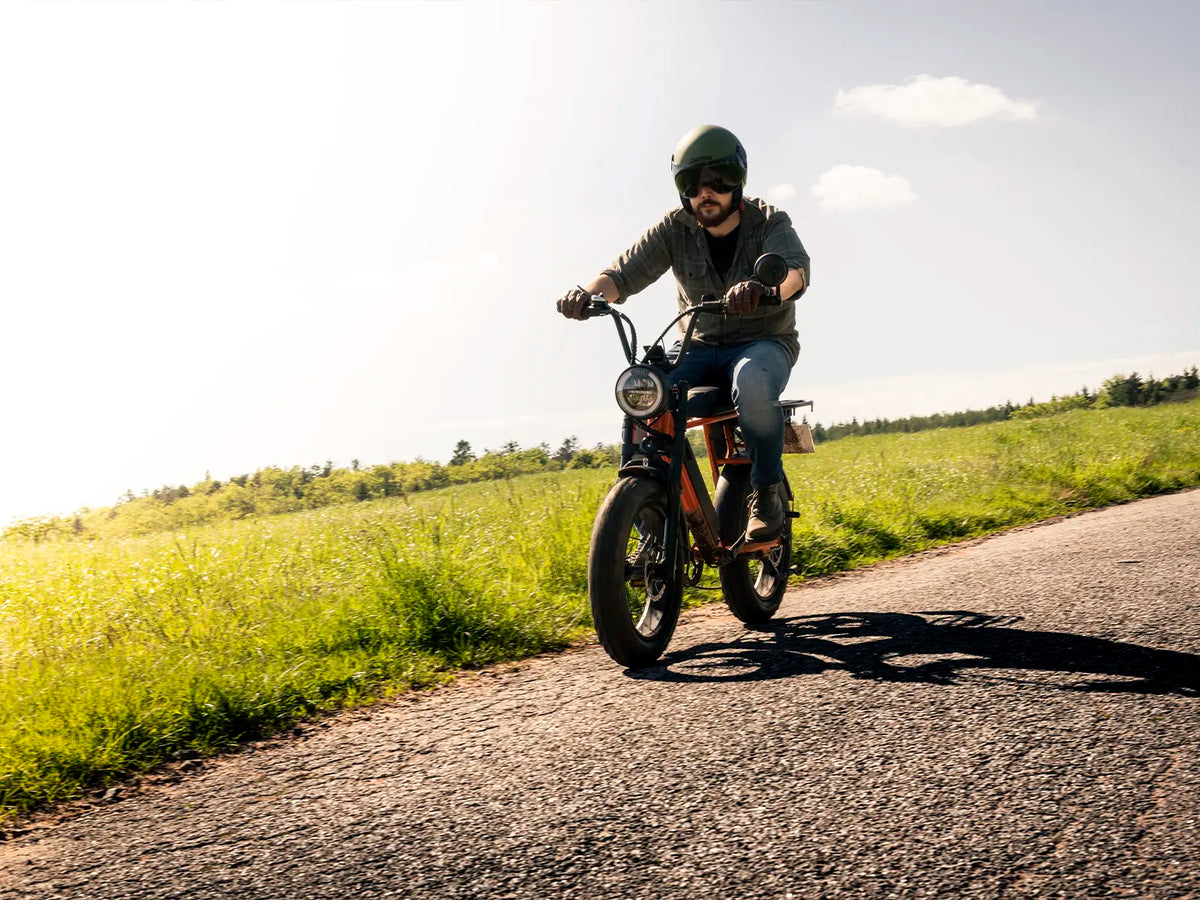
Why Is E-Bike Battery Range Stated as an Estimated Spectrum?
One of the most pressing questions for prospective electric bike riders and daily commuters is simple: how far can an e-bike go on one charge?
When browsing e-bike specifications, you will rarely see a single fixed distance figure. Instead, reputable brands cite range spans—for instance, 40 to 80 km or 25 to 50 miles per full charge. This variability is not a marketing loophole; rather, it reflects the multi-variable dynamics of electric mobility.
In this guide, we will break down why manufacturers state range as an estimated spectrum, explore the physical and environmental factors affecting battery consumption, examine real-world range capabilities across Onemile e-bike lineups, and provide five practical tips to maximize your total mileage per charge.
What Affects E-Bike Battery Range?
1. Battery Capacity (Ah / Wh)
It is usually measured in Amp-hours (Ah) or Watt-hours (Wh). Watt-hours represent total energy calculated by multiplying voltage (V) by capacity (Ah). Higher Wh ratings directly translate to more stored energy, giving the motor a larger reservoir to draw from.
2. Pedal Assist Levels & Riding Modes
- Throttle / High Power Mode: Relies primarily or entirely on the motor, delivering instant power and speed but depleting energy rapidly.
- Low Pedal Assist (Eco Mode): Blends electric power subtly with active pedaling, dramatically expanding total distance covered on a single charge.
3. Rider Weight & Payload
Payload weight directly dictates the workload required from the electric motor. A heavier payload increases inertia and rolling resistance, requiring higher wattage output to maintain speed.
4. Terrain, Incline & Road Surface
Smooth asphalt produces minimal friction, allowing efficient energy conservation. Conversely, climbing steep hills, tackling loose gravel, or navigating off-road trails requires continuous high-torque output, consuming significantly more watt-hours per kilometer.
5. Weather & Environmental Conditions
Headwinds force the motor to work harder to cut through aerodynamic drag. Furthermore, lithium-ion battery chemistry is sensitive to ambient temperatures. Extreme cold lowers chemical reaction speeds inside cells, temporarily reducing effective capacity, while extreme heat accelerates thermal degradation.
6. Tire Pressure & Mechanical Resistance
Riding with underinflated tires creates a wider contact patch with the ground, generating excessive rolling resistance that drains power prematurely. Similarly, unlubricated chains or misaligned brakes create friction that drags down efficiency.
How Far Can Different Onemile E-Bikes Go on One Charge?
| Onemile Model | Battery Capacity | Official Max Range | Ideal Riding Scenario |
|---|---|---|---|
| Nomad | 10Ah / 15Ah | Up to 100 km / 150 km | Long-distance urban cruising & multi-terrain touring |
| Nomad Lite | 10Ah | Up to 100 km | Lightweight, highly efficient daily urban commuting |
| Scrambler Pro | 14Ah / 19.2Ah | 45 – 80 km (mode dependent) | All-terrain adventure, off-road exploration & high-power riding |
| Scrambler | 14Ah / 19.2Ah | 35 – 60 km (mode dependent) | Retro cruiser aesthetics, city cruising & casual outdoor rides |
The Nomad Series (Ultra-Long Range)
Engineered with high-density battery cells and highly optimized motor algorithms, the Nomad series delivers up to 150 km on a single charge. It is tailored for riders who demand maximum range and want to eliminate range anxiety on extended trips.
The Scrambler Series (High-Performance Off-Road)
Designed for riders seeking bold styling, instant torque, and rugged capability. The Scrambler series maintains a dependable 35–80 km range while easily managing tough off-road trails and steep terrain.
5 Practical Tips to Increase Your E-Bike Range
- Optimize Pedal Assist Settings: Use lower assistance modes when accelerating from a complete stop or cruising on flat ground. Pedaling actively alongside the motor significantly conserves battery energy.
- Maintain Proper Tire Inflation: Check tire pressure weekly using a pressure gauge. Keeping tires inflated to recommended PSI levels minimizes rolling resistance and extends battery life.
- Ride Smoothly and Anticipate Traffic: Avoid frequent abrupt accelerations and hard stops. Maintaining a steady, predictable pace conserves substantial energy, much like efficient driving in electric vehicles.
- Reduce Unnecessary Cargo Weight: Remove extra bags, heavy locks, or unnecessary gear from your rack or backpack when not required for your trip.
- Practice Smart Battery Maintenance: Store and charge your lithium-ion battery in moderate indoor temperatures (15°C–25°C). For long-term storage, keep the battery charged between 50% and 80% to preserve cell health.
Conclusion: Choosing the Right E-Bike Range for Your Needs
When selecting an electric bike, look beyond headline range numbers and evaluate your actual daily commute distance, typical terrain, and riding habits. Whether you need the 150 km endurance of the Onemile Nomad or the rugged versatility of the Scrambler, choosing the right battery configuration ensures seamless daily transportation.
Need tailored recommendations?
Contact the experts at Onemile today for professional advice on finding the perfect e-bike for your lifestyle!

Leave a comment
All comments are moderated before being published.
This site is protected by hCaptcha and the hCaptcha Privacy Policy and Terms of Service apply.