


Why Choosing the Right E-Bike Load Capacity Matters?
- Structural Safety and Frame Integrity: Overloading puts excessive, unnatural stress on the main frame, front fork joints, and especially the folding mechanisms. Over time, this concentrated mechanical stress can lead to accelerated metal fatigue, microscopic fractures, or catastrophic structural failure during high-speed descents.
- Motor Performance and Real-World Range: An electric motor works exponentially harder under heavy loads. Exceeding or pushing the limits reduces hill-climbing torque, drains the lithium-ion battery much faster, and drastically reduces your actual real-world riding range per charge.
- Component Wear and Maintenance Costs: High total operating loads accelerate the wear and tear on high-friction components. You will experience faster tire tread degradation, rapid brake pad consumption, wheel spoke tension loss, and rim warping, significantly shortening the overall lifespan of your bicycle.
What Determines an E-Bike's Load Capacity?
Not all electric bicycles are engineered equally. Several core architectural factors determine how much weight an e-bike can safely handle:
Frame Material & Design
The frame is the primary load-bearing structure — aviation-grade magnesium alloy (e.g., AZ80A-T5) offers an exceptional strength-to-weight ratio and superior vibration damping compared to standard steel or low-grade alloys, directly enabling higher safe payload limits; reinforced folding joints with dual-lock mechanisms and gusseted welds prevent structural failure at stress concentration points under dynamic heavy loads.
Wheels & Tires
Wheels and tires bear the full static and dynamic weight of rider + cargo — wide tires (e.g., 20×4.0") increase contact patch to reduce ground pressure and improve stability, while high spoke density (36–48 spokes, especially on rear wheels) evenly distributes radial loads across the rim, minimizing spoke tension imbalance and preventing premature wheel collapse under sustained heavy use.
Brakes & Suspension
Heavy loads generate significantly more kinetic energy, demanding greater braking force and thermal resilience — hydraulic disc brakes (particularly 4-piston calipers) deliver 20–30% more stopping power with linear modulation and reduced hand fatigue, ensuring reliable deceleration even on steep descents; matched with preload-adjustable suspension, they prevent bottoming out and maintain tire contact for safe, controlled handling under maximum payload conditions.
How Much Weight Can Different Onemile E-Bikes Carry?
Onemile designs each series with specific rider profiles and load scenarios in mind. Here is a breakdown of our flagship models:
| Model | Maximum Payload | Recommended Use Case |
|---|---|---|
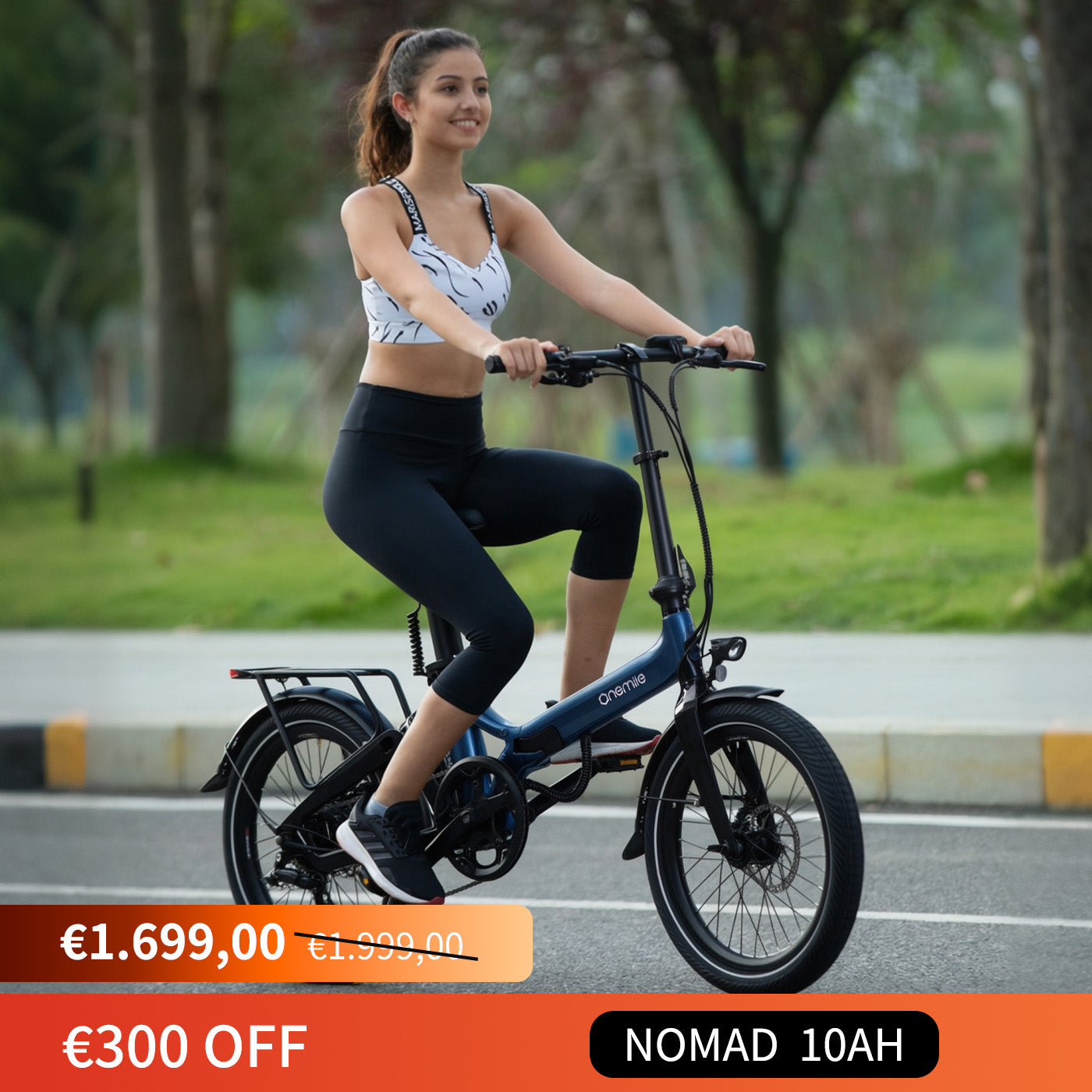
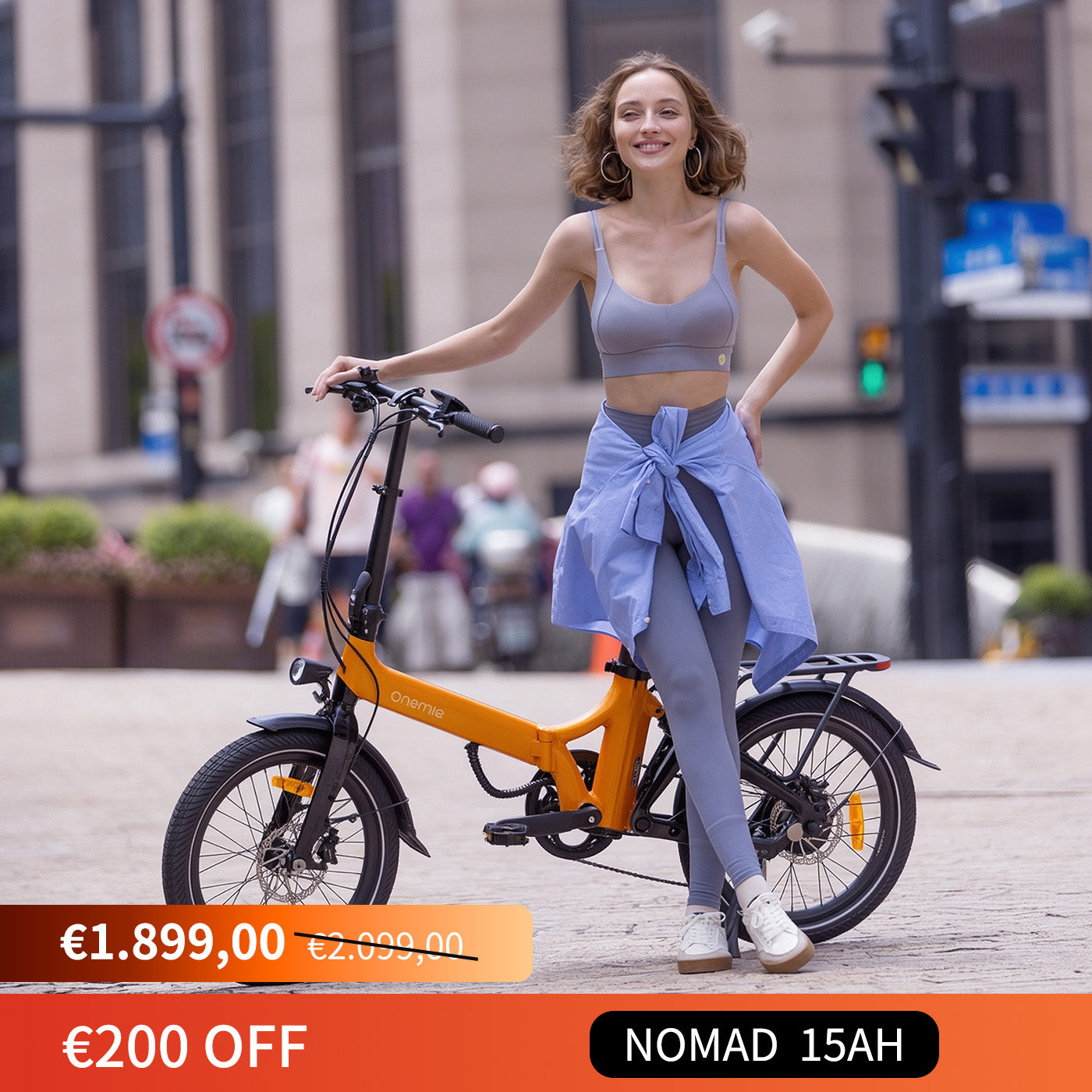
| Nomad | 120 kg (264 lbs) | Urban all-terrain commuting, light cargo/pannier mounting |
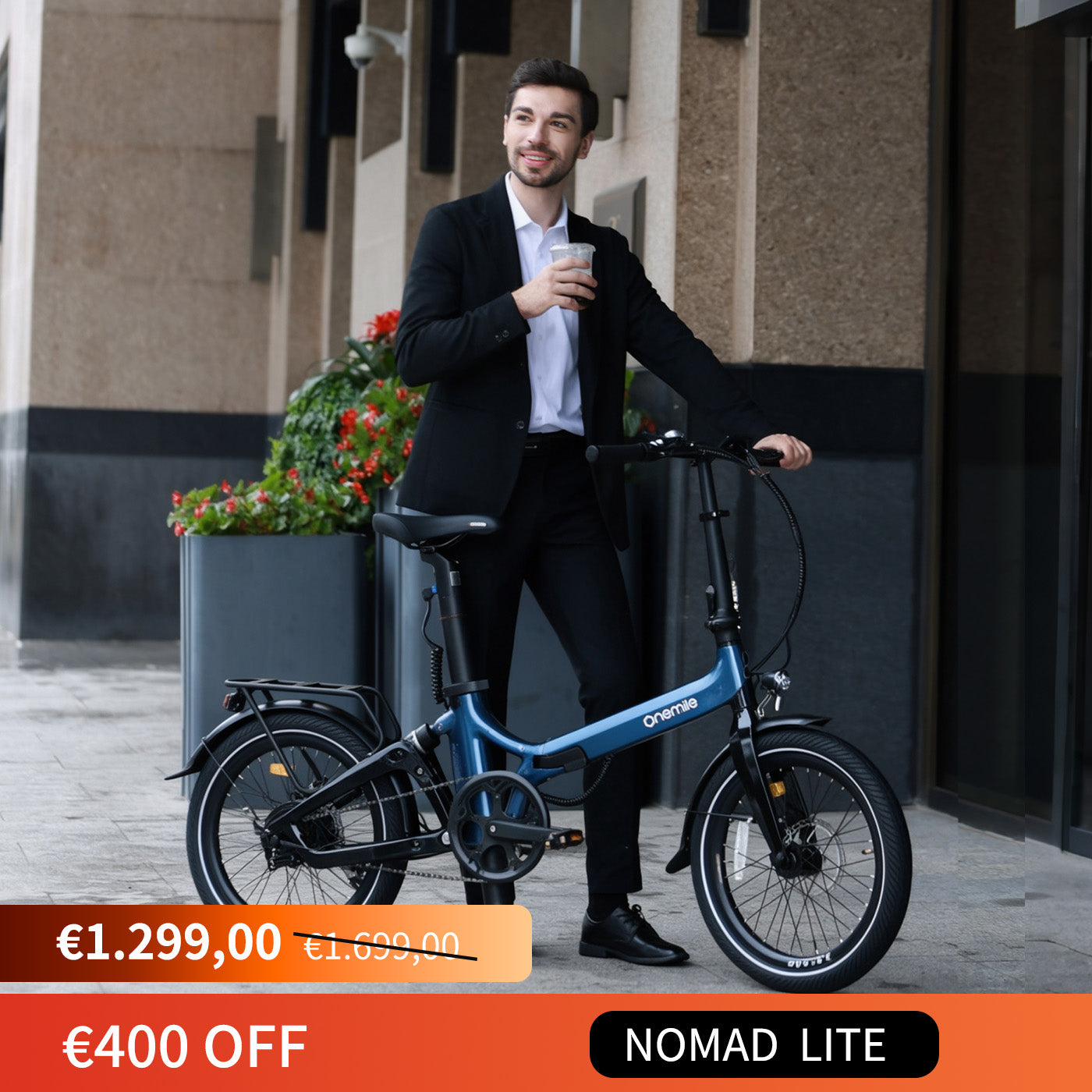
| Nomad Lite | 120 kg (264 lbs) | Portable city commuting, everyday lightweight gear |
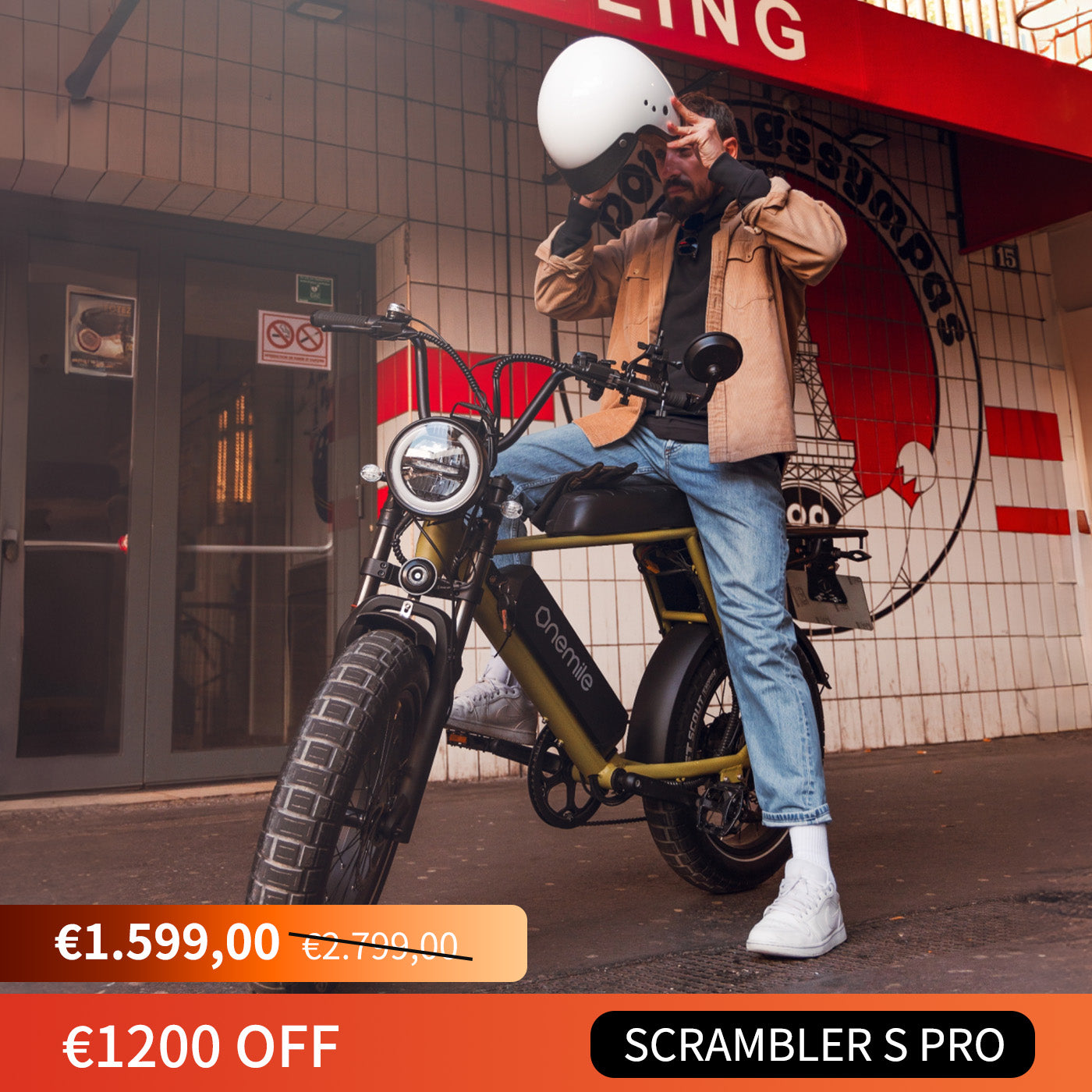
| Scrambler Pro | 125 kg (275 lbs) | High-performance all-terrain, heavy-duty/long-range cruising |
| Scrambler | 125 kg (275 lbs) | Retro off-road, multi-scenario mixed riding |
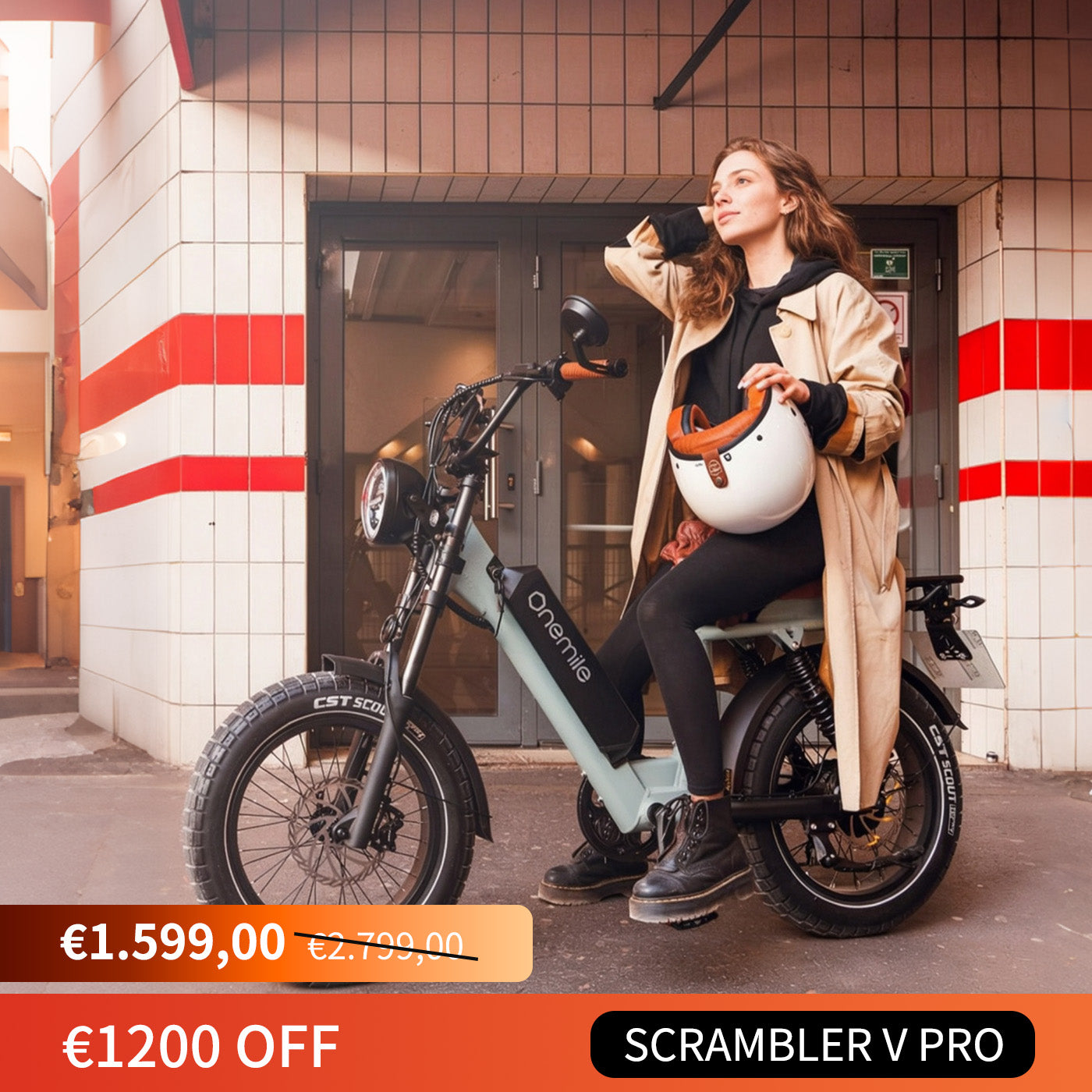
- Scrambler Series (125 kg): Built with an ultra-rigid reinforced frame and a high-torque motor, the Scrambler series is engineered for taller riders, those carrying heavy daily cargo, or anyone tackling rugged, uneven terrain.
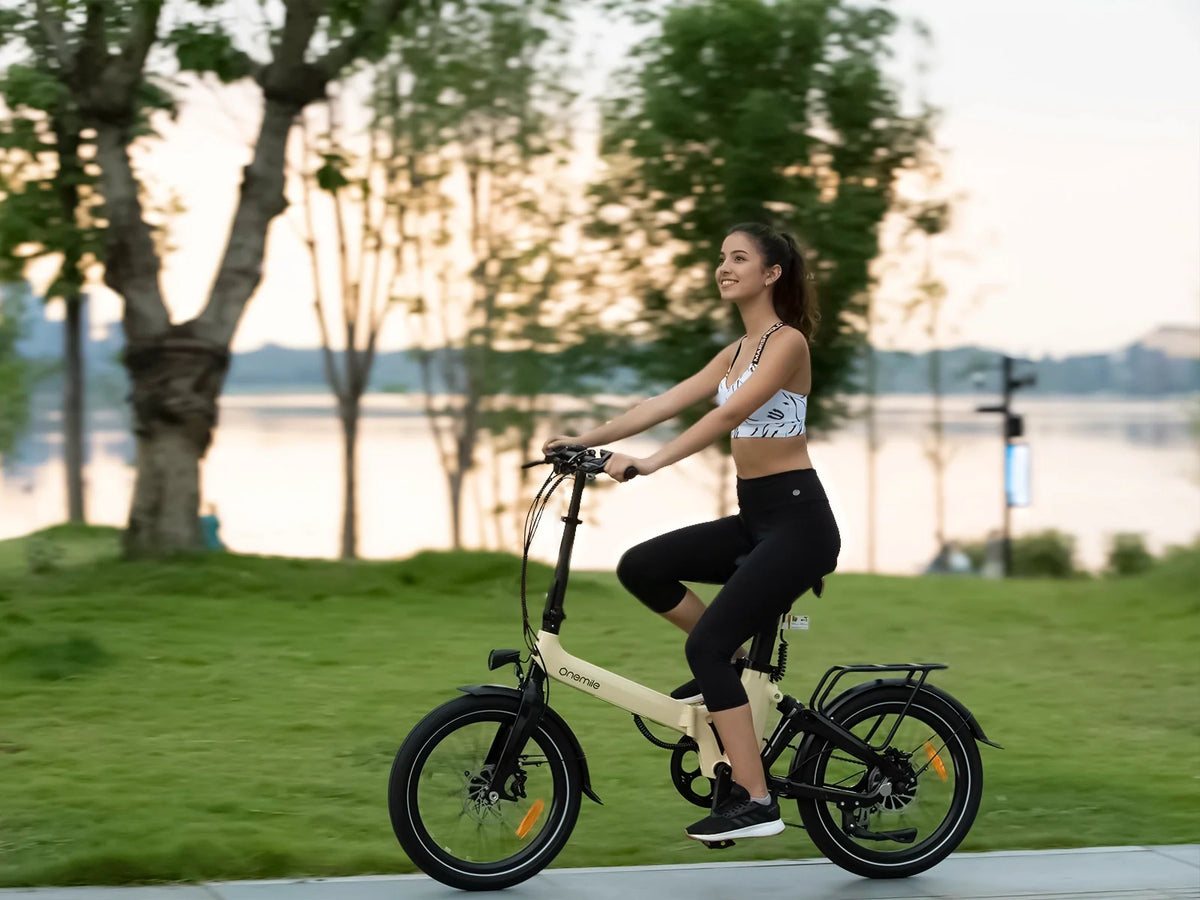
- Nomad Series (120 kg): The Nomad series brilliantly bridges the gap between folding portability and robust load-bearing capability, effortlessly handling daily urban commutes, grocery runs, and travel gear.
How to Calculate Your Total Riding Weight
Before heading out, calculate your complete operational load using this simple formula:
Total Load = Rider Weight + Backpack/Gear + Gargo/Accessories
Practical Example: If you weigh 85 kg, carry a 5 kg laptop backpack, and load 15 kg of groceries or gear onto the rear rack, your total operating weight is 105 kg. This sits comfortably within the safety limits of both the Nomad and Scrambler series.
Overload Warning and Best Practices: If your total calculation approaches or hits the maximum weight limit, take extra precautions. Consider increasing your tire pressure slightly to prevent pinch flats, and slow down significantly when riding over potholes or rough urban pavement to minimize dynamic impact shocks.
Conclusion
Choosing an e-bike that precisely matches your physical profile and cargo requirements is the ultimate foundation for safety, comfort, and vehicle durability.
Whether you need a high-performance, rugged retro e-bike with a 125 kg capacity or a versatile folding urban commuter supporting 120 kg, Onemile provides state-of-the-art engineering solutions tailored for every kind of rider.

Hinterlasse einen Kommentar
Alle Kommentare werden vor der Veröffentlichung geprüft.
Diese Website ist durch hCaptcha geschützt und es gelten die allgemeinen Geschäftsbedingungen und Datenschutzbestimmungen von hCaptcha.